I build practical digital systems for UK skip hire and waste businesses — from online skip ordering and postcode checking to dispatch dashboards, driver workflows, Waste Transfer Notes, EWC code records and digital waste tracking preparation.
Built from real-world skip hire operations — not generic templates. The goal is simple: reduce admin, improve dispatch visibility and give your office, drivers and customers a smoother workflow.
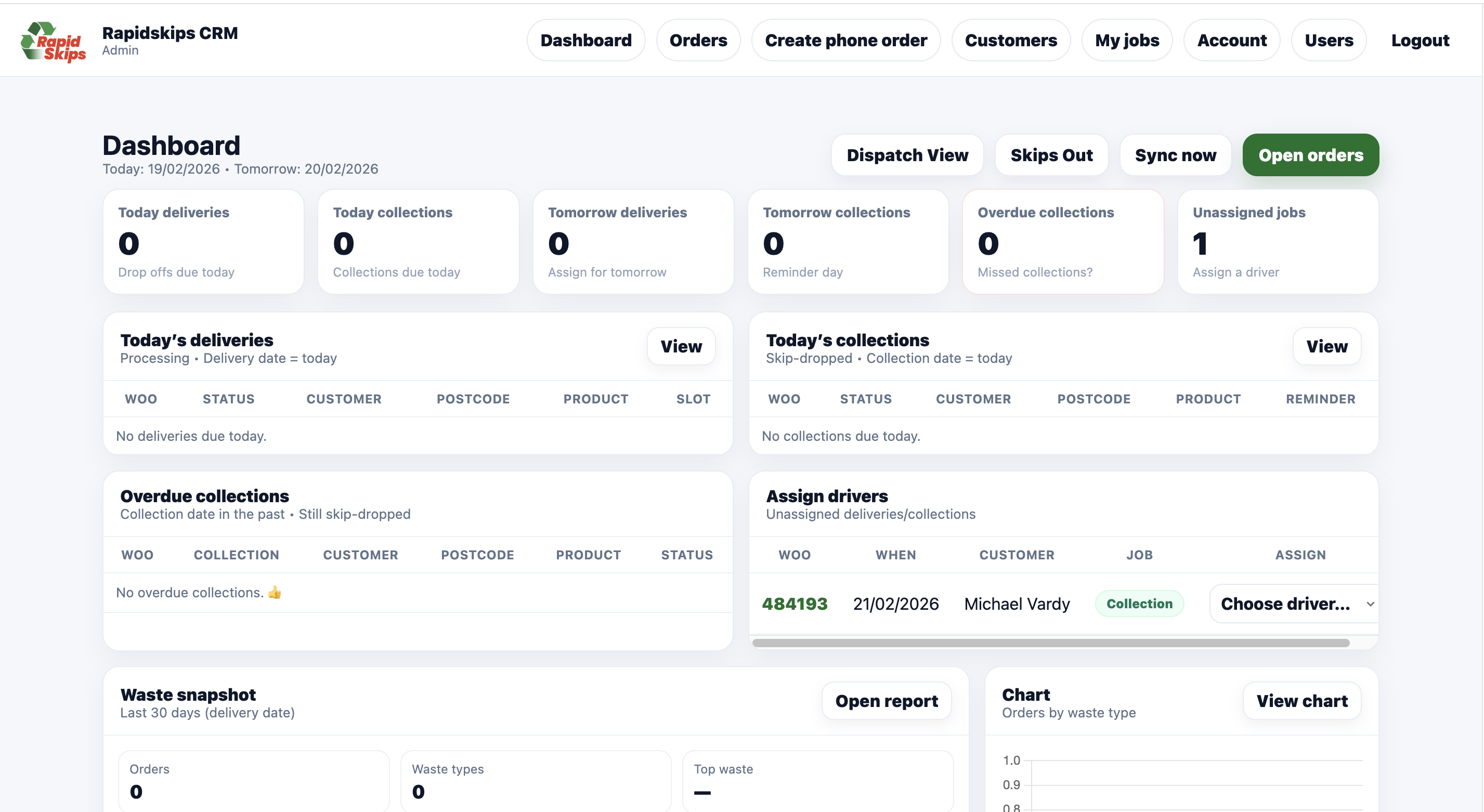
Deliveries, collections, swaps, permits, reminders, driver actions and Waste Transfer Notes in one joined-up workflow.
A skip company needs to collect the right information before the job reaches the office. That means skip size, waste type, access, positioning, permits, delivery dates, collection rules, service areas and driver notes — not just a name, email and payment.
Guide customers through skip size, address, waste type, preferred dates, contact details, payment and permit questions without overcomplicating the journey.
Check service areas before customers order, show clear messages for unsupported postcodes and route enquiries correctly.
Lead times, delivery windows, exchange logic, permit prompts, unavailable days, skip types and pricing rules can be handled inside the workflow.
The point is not just to make the website look better. The system should make the whole skip operation easier to run.
Customers provide better information before the job reaches the office.
Office staff can see today, tomorrow, overdue and unassigned work more clearly.
Orders, reminders, paperwork and customer updates can be handled from one place.
Drivers can receive job details, update statuses, add notes and capture signatures.
Waste types, EWC codes, WTNs, signatures and audit history are easier to manage.
The CRM can grow into digital waste tracking, reporting, APIs and customer portals.
I created both the Rapid Skips customer-facing website/order flow and a private internal CRM for managing the operational side of the business. This is not theory — it is based on real skip-hire workflows, real office problems and real driver processes.
WooCommerce-based ordering flow with service checks, skip details, delivery information and cleaner customer communication.
Orders, dispatch, phone bookings, permits, swaps, collections, reminders and driver workflows in a private admin system.
Waste Transfer Notes, EWC/waste IDs, signatures, driver details and customer/order information generated from the system.
Instead of forcing your business into generic CRM software, the system can be designed around your daily workflow — office staff, drivers, customers, compliance and reporting.
Manage website orders, phone orders, customer details, skip sizes, waste types, delivery dates, collection dates and payment status.
See today, tomorrow, overdue and unassigned work. Plan deliveries, collections, swaps and driver assignments from one screen.
Create phone and yard orders with the right customer, address, pricing, date, timing, waste and access details recorded properly.
Track whether a skip is going on private land or public highway, and manage statuses such as permit required, applied for and granted.
Give drivers a mobile-friendly view for assigned jobs, completed work, signatures, unable-to-collect reasons and site notes.
Automate skip reminders, extension updates, customer emails, internal alerts and paperwork to reduce repetitive admin.
UK waste tracking is moving towards cleaner digital records. GOV.UK currently lists Phase 1 as mandatory for waste receiving site operators from October 2026 in England, Wales and Northern Ireland, with Phase 2 for waste collectors, carriers, brokers and dealers planned from October 2027. A good CRM should start storing the right waste data now.
As waste tracking becomes more digital, skip companies may start looking for systems that do more than take online payments. They will want clear records, searchable jobs, driver proof, waste reports, customer documents and exportable compliance data.
Building those foundations now means your website and CRM can become part of the day-to-day operation, not just a marketing tool.
These examples show the type of operational tooling that can sit behind a skip hire website — from online ordering to CRM dashboards, dispatch views and driver screens.
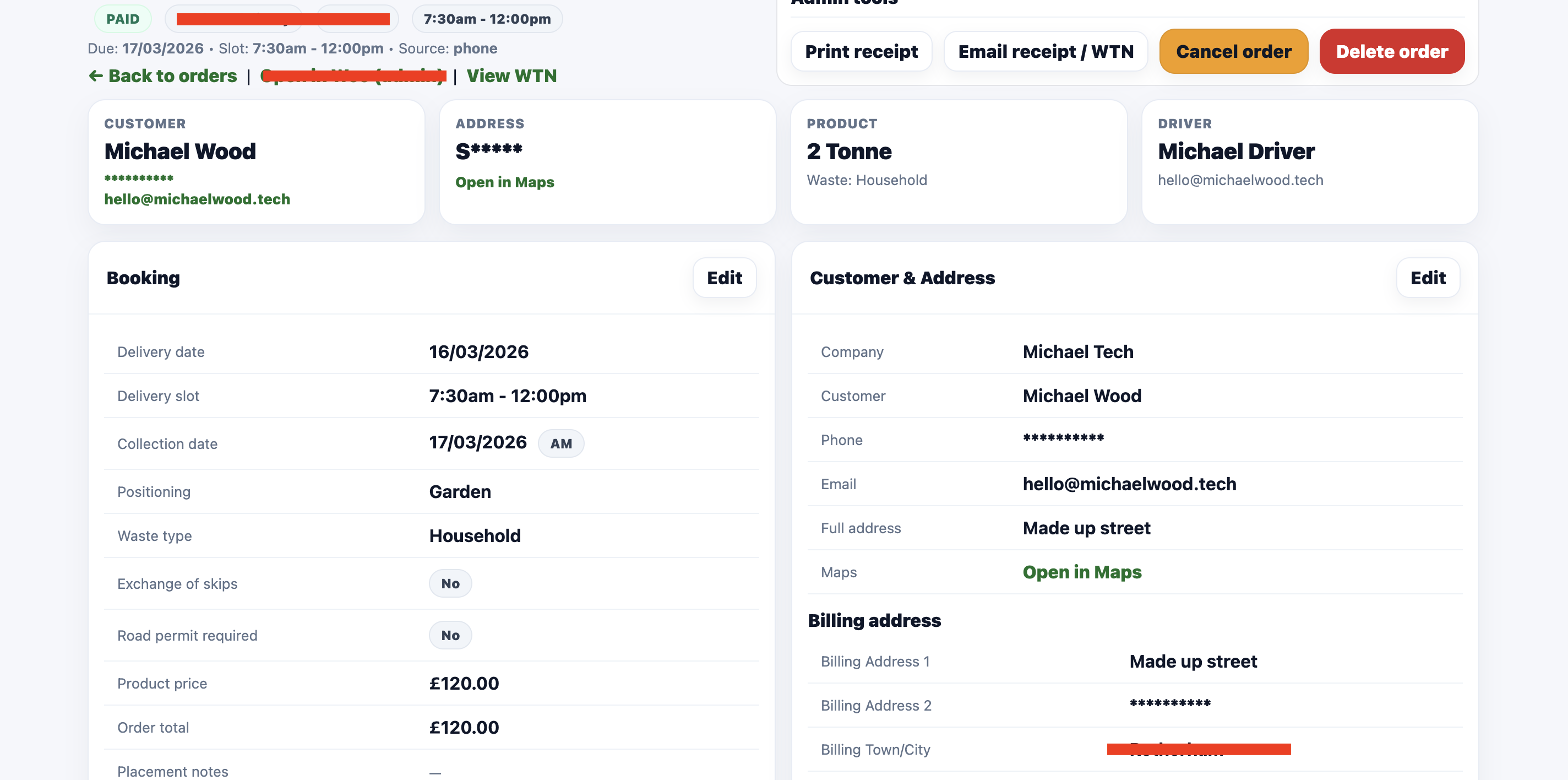
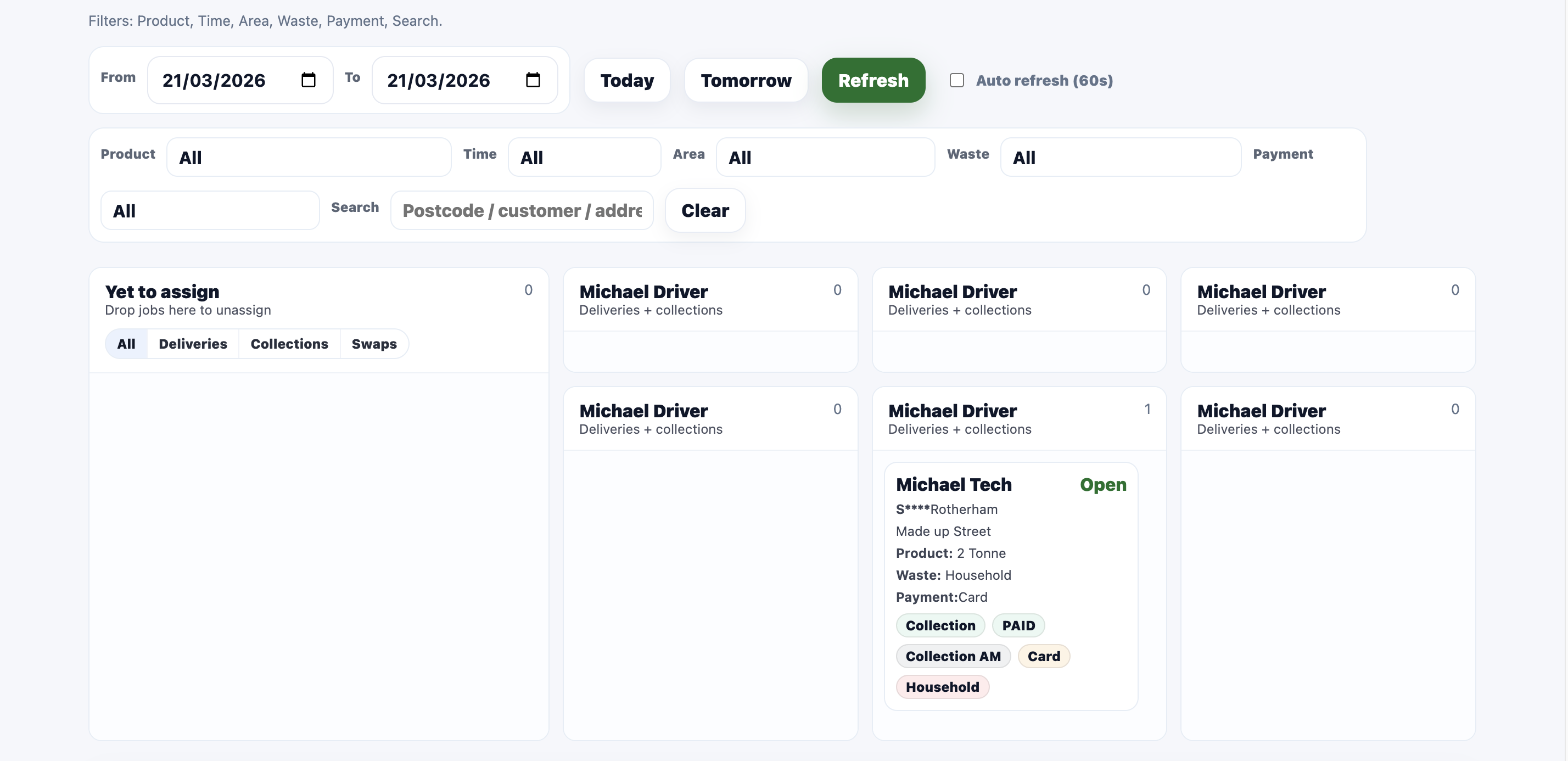
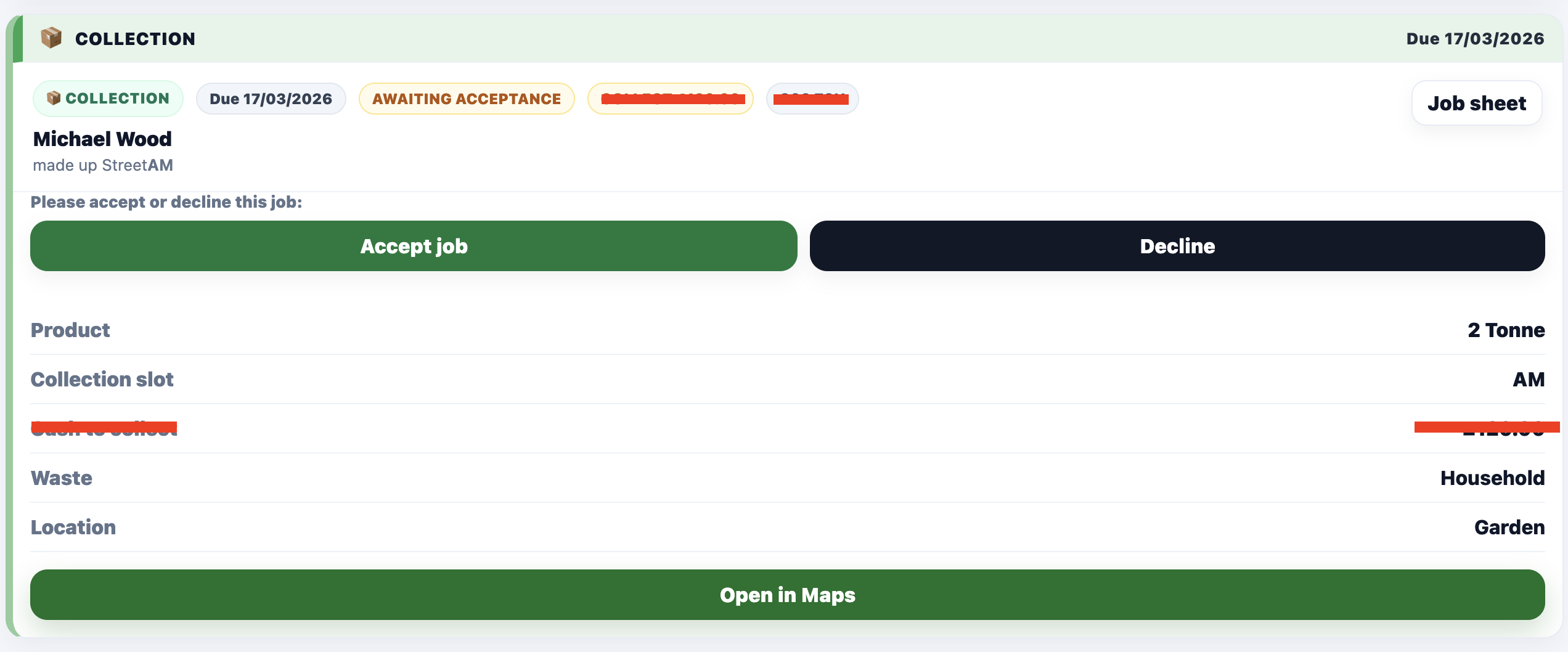
You do not have to build everything at once. The sensible approach is to solve the biggest operational problem first, then add more automation and reporting as the business grows.
Professional website, service pages, skip pages, postcode checking, enquiry forms, online booking and payment flow.
Capture online orders in a cleaner admin area with job statuses, booking notes, order details and office controls.
Dispatch planning, driver assignment, phone orders, collections, swaps, reminders, permits, failed collection workflows and internal reporting.
Waste Transfer Notes, EWC codes, signatures, waste reports, audit history, document storage and future export/API-ready structure.
This is ideal for skip hire companies and waste businesses that want to modernise how they handle online bookings, internal admin, dispatch and paperwork.
A good skip hire system should make the office easier to run, give drivers clearer instructions and give customers a smoother journey.
Yes. A skip ordering flow can be built around WooCommerce where it makes sense, with extra order information passed through to admin emails, the CRM and customer records.
Yes. The website can handle the customer-facing order journey, while the private CRM handles internal operations such as dispatch, phone orders, permits, drivers, collections and reporting.
Yes. The system can generate Waste Transfer Notes from order, customer, waste, driver and signature data, then store or send them as part of the workflow.
Yes. The system can be structured to store cleaner waste records, EWC codes, timestamps, customer details, transfer information, audit history and export-ready data.
Yes. Driver screens can be built mobile-friendly so drivers can view assigned jobs, mark work complete, report issues, add notes and capture signatures.
Yes. A sensible route is usually website/order flow first, then CRM and dispatch, then driver workflows, automation, reporting and waste compliance features.
Whether you need a better skip hire website, a booking system, an internal CRM, driver workflows or Waste Transfer Note automation, I can help plan and build a system around how your business actually works.
