
Designed and built a private custom CRM tailored to real skip-hire operations
← All projects
Custom CRM + Operations
Rapid Skips — Internal CRM (Dispatch + Orders + Drivers)
A custom-built internal CRM that brought dispatch, phone orders, reminders, WTN automation, driver workflows, and day-to-day skip operations into one system.
PHP
Custom CRM
WooCommerce sync
Dispatch system
Operations
Admin tooling
Automation
The brief
What needed to change.
Rapid Skips needed a proper internal operations system to manage WooCommerce-linked orders, phone bookings, dispatch planning, collections, swaps, permits, reminders, waste paperwork, and driver workflows in a way that matched how the business actually operates.
The build
What I built and improved.
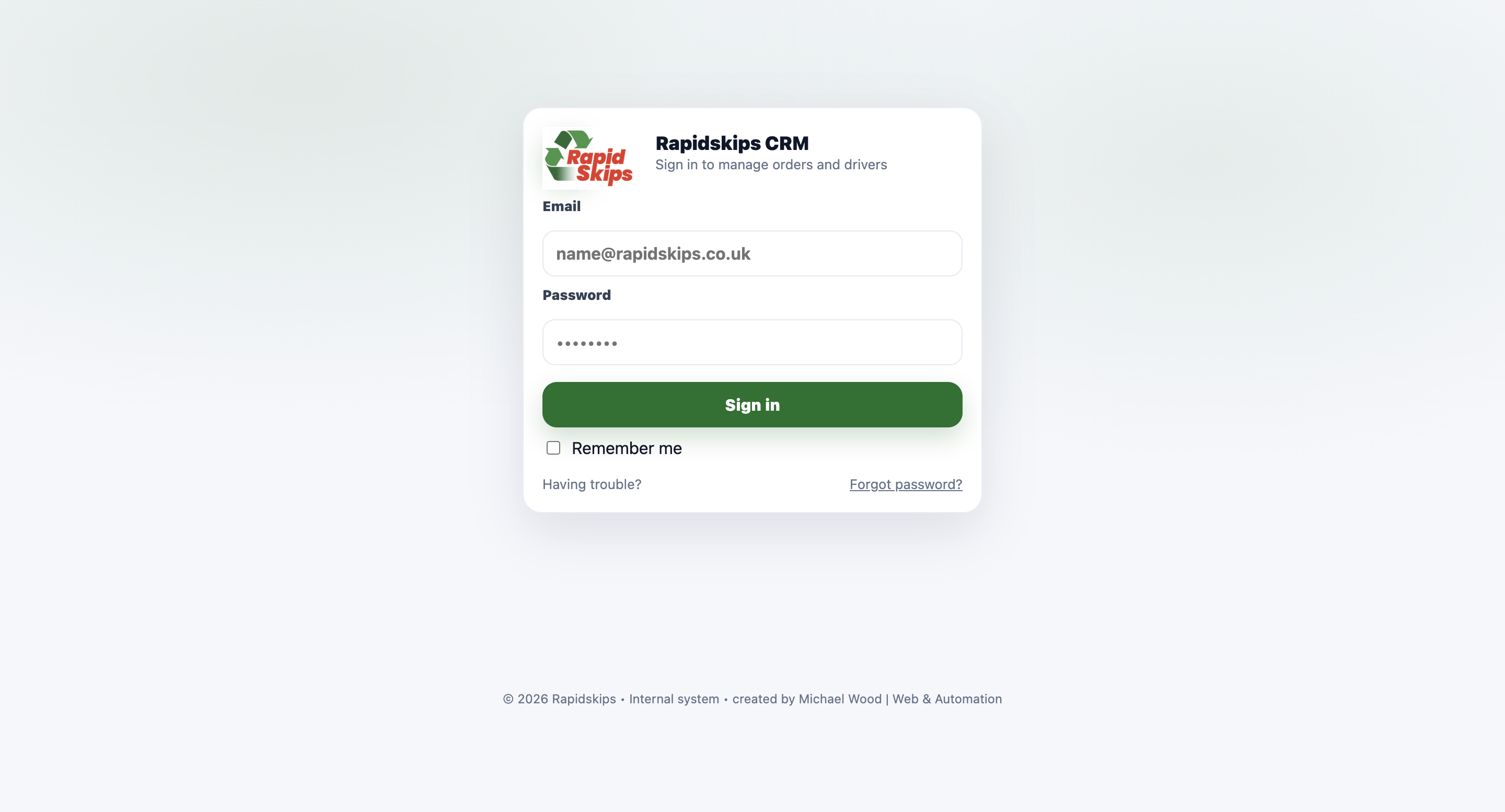
Created dashboard views for Today, Tomorrow, Overdue and Unassigned work
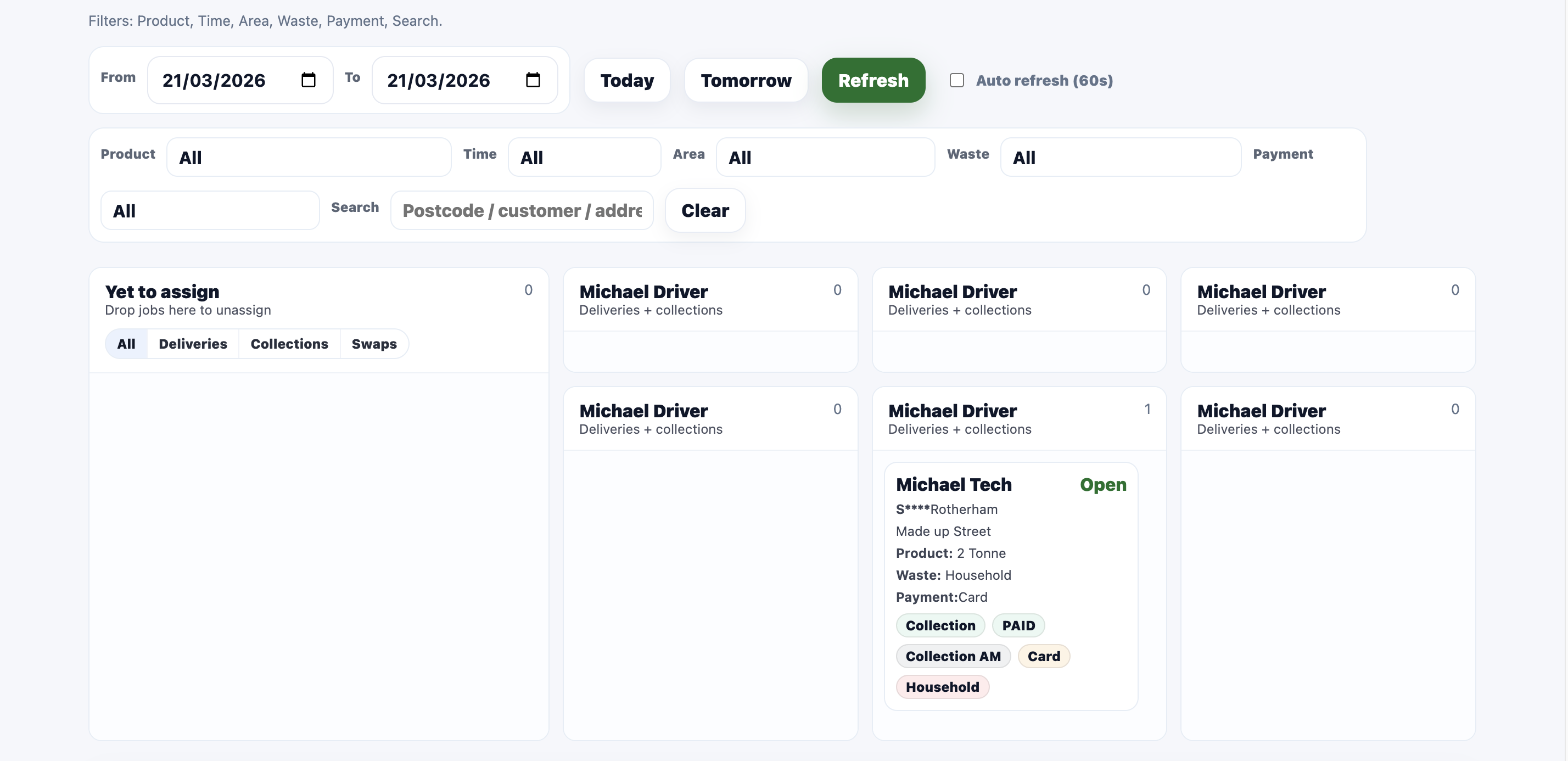
Built dispatch planning for deliveries, collections, swaps and driver assignment
Added manual phone-order handling with price overrides and AM/PM timing
Introduced permit tracking, failed-collection reporting and driver job actions
Automated skip reminders, extension updates and Waste Transfer Note sending
Improved waste handling, product naming, payment flags and company data consistency
Screens
See the finished work.
Rapid Skips needed more than a basic admin area. They needed an internal system built around the way the business actually runs day to day. The aim of the project was to reduce friction, cut down avoidable mistakes, automate repetitive processes, and give office staff and drivers a much clearer operational workflow across deliveries, collections, swaps, permits, reminders, and phone orders.
This CRM was developed as a private internal platform that works alongside the wider website and WooCommerce ordering process. Instead of relying on scattered processes, manual workarounds, and repeated checking between systems, the business now has one central workspace that brings dispatch, order handling, customer information, driver actions, compliance-related tasks, and operational automation together.
One of the biggest improvements was dispatch and planning. I built operational dashboard views so staff can quickly see what needs attention today, tomorrow, what is overdue, and what is still unassigned. I also created a dispatch workflow that supports how the office actually organises jobs, including temporary planning areas for sorting work before final assignment to drivers, driver assignment controls, filters, and clearer operational visibility across deliveries, collections, and swaps.
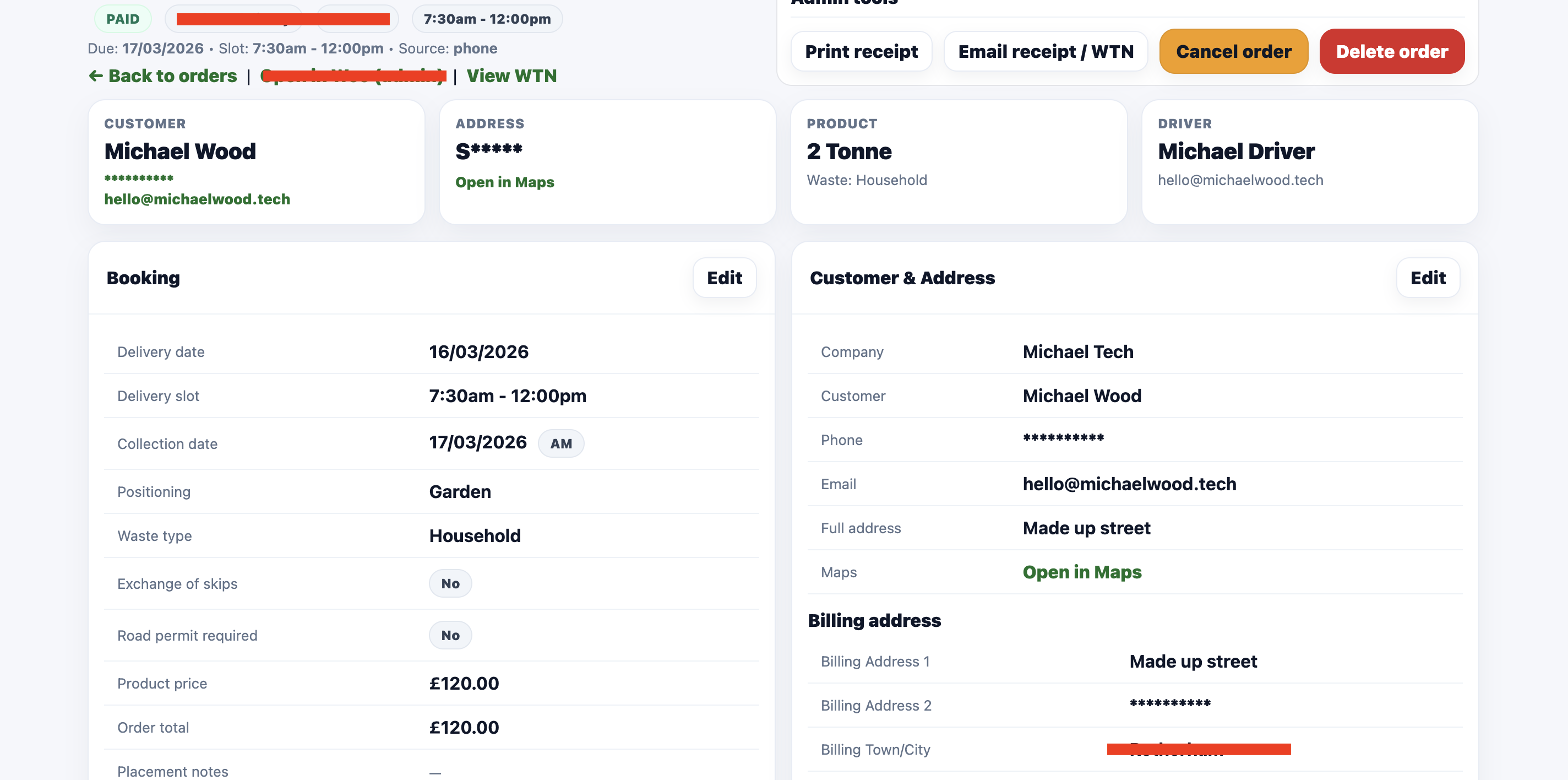
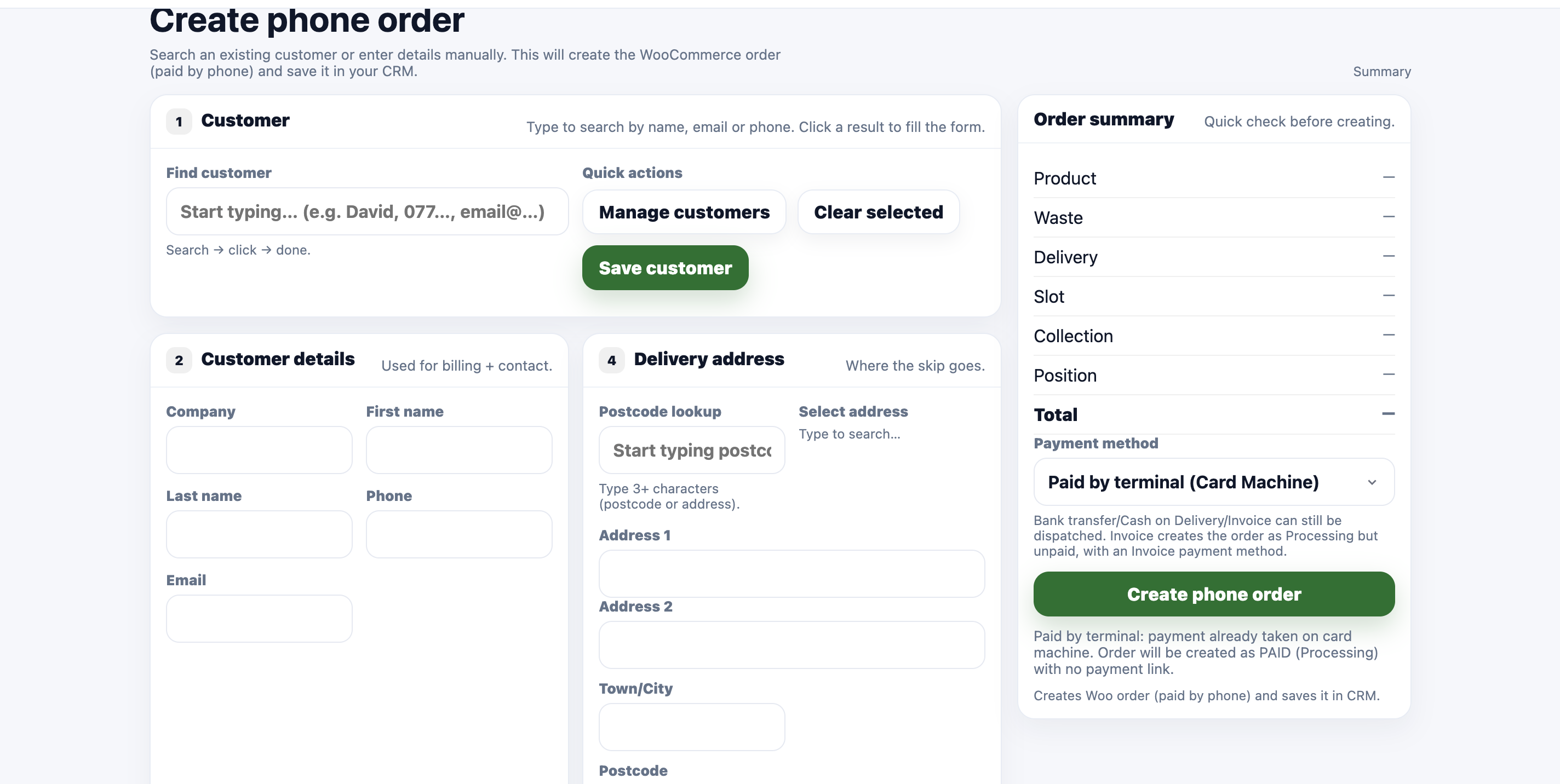
The system also improved how phone orders are handled. I built a custom phone-order flow that supports manual bookings cleanly, including price override controls where approved adjustments are needed. This means staff can deal with real customer calls more efficiently without breaking the structure of the order process, while still keeping everything consistent with the internal workflow and the wider WooCommerce-linked setup.
Permit handling was another key part of the build. For skips placed on the road, I added a clearer permit workflow with visible statuses such as applied for and granted, so the office can track compliance progress at a glance. This gives the team a much better operational view of where permit-related jobs stand without relying on separate notes or manual follow-up.
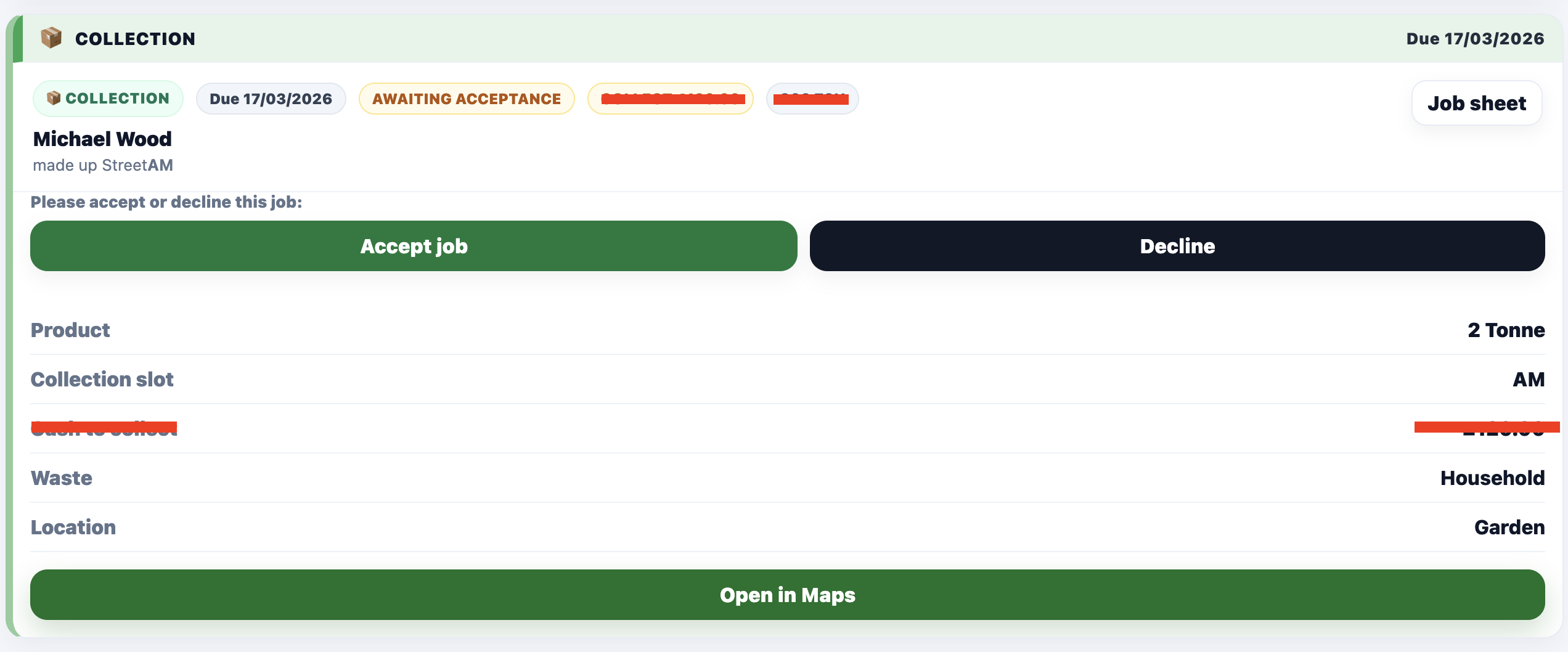
Driver workflows were improved too. I added a customer unavailable for signature action for proof-of-delivery edge cases, as well as an unable to collect workflow with reasons such as blocked access, overloaded skip, or unsafe conditions. That gives the office immediate feedback from the field, helps them act faster, and makes the CRM reflect the reality of what drivers deal with on site.
Swap and collection scenarios were also made much cleaner. I implemented a dedicated swap action that duplicates the original order into a new operational job and marks it clearly as a swap. I also added a one-click skip full action so the office can quickly create follow-up collection work when a customer says the skip is ready to be removed.
A big part of the value in this project came from automation. Skip reminders can be handled automatically, extensions update directly inside the CRM, and waste transfer notes can be generated and sent automatically as part of the operational flow. That removes a lot of repetitive admin, reduces the chance of things being missed, and keeps the office team working from a single reliable system instead of chasing tasks manually.
Overall, this project was about building software around real operations rather than forcing operations around software.
Swipe through screenshots →
Results
What changed for the business.
✓
Centralised dispatch, orders, reminders, paperwork and driver updates
✓
Reduced repetitive admin through automation
✓
Faster dispatch planning and clearer daily workload visibility
✓
Improved communication between office staff and drivers
✓
Cleaner handling of permits, swaps, failed collections and exceptions
✓
More consistent data across orders, waste types and operational records
✓
Stronger foundation for reporting, compliance and future tooling
Your project
Need something similar?
Tell me what you need built, improved or made easier.